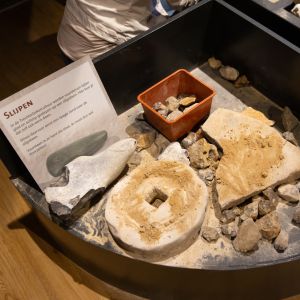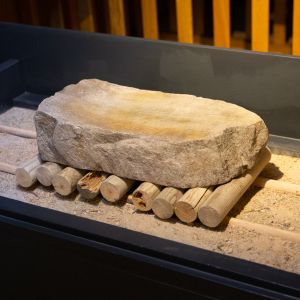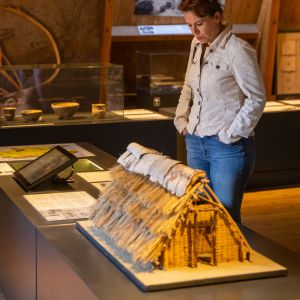
The OERmuseum in Diever is a perfect fit for a fun and educational day out with the family. In our museum in Diever, we explain the prehistoric times in a clear and straightforward way. Using dioramas, videos and touch screens, children discover who the people were who lived and worked in Drenthe many centuries ago.
Southwest Drenthe, and especially the area around the Havelterberg, has a wealth of archaeological discoveries. The prehistoric history can be found everywhere in the region.
The OERmuseum in Diever distinguishes six archaeological gems in Southwest Drenthe:
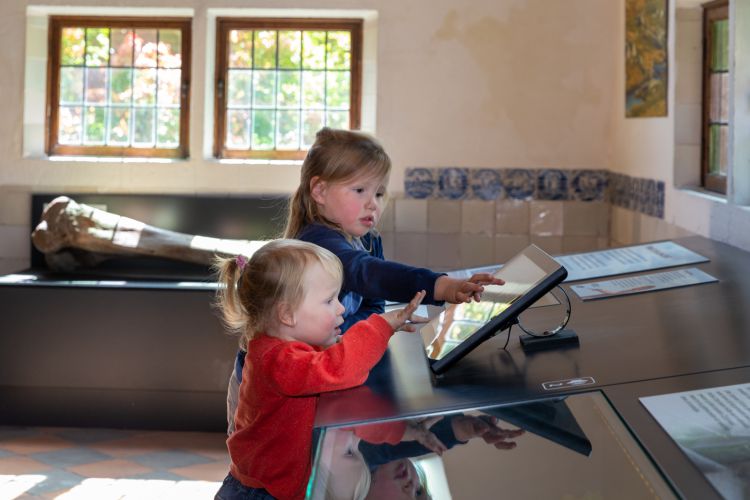
The OERmuseum is also an ideal destination for a day out with the children. The museum provides a playful introduction to prehistoric times in Drenthe: dress up as a reindeer hunter, construct a dolmen, carry out an excavation and observe how a prehistoric bronze oven works. Or go on a treasure hunt through the museum. From the age of 12 you can also join the prehistoric walk to the dolmens, where you will discover the story behind the creation of the dolmens.
If you would like to go on a walk to see dolmens, burial mounds, prehistoric farms or traces of World War II, then you could join the archaeological walks organised by the OERmuseum in Diever. The OERmuseum organises prehistoric walks on several days near Havelte and in Diever.
Check the calendar for upcoming walks.
If you would like to go on a cycling trip to see dolmens, burial mounds, prehistoric farms or traces of World War II, then you could join the archaeological cycling tours organised by the OERmuseum in Diever. The OERmuseum organises prehistoric cycling tours on several days along the slopes of the Havelterberg and Bisschopsberg and around Lhee.
Check the calendar for upcoming cycling tours.
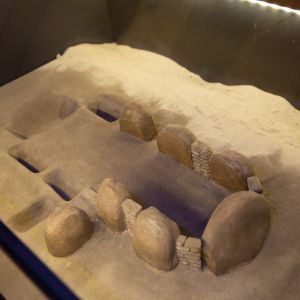
Drenthe is known for its dolmens. You can still find many dolmens throughout our prehistoric province, including in Havelte and in Diever. But what exactly is the story behind the origin of these dolmens? The answer goes back 5,000 years. A guide from the OERmuseum takes you back in time to the people who built the dolmens: who were these early farmers, what was their life and culture like? What about their houses and animals? What did the landscape used to look like? And what do the archaeological finds like the beautiful pottery tell us? But above all: how did they make a dolmen, and why? Coffee and tea will be provided. Tip: Feel free to bring a folding chair. Check the calendar for the dates when you can attend ‘the story of the dolmen’.
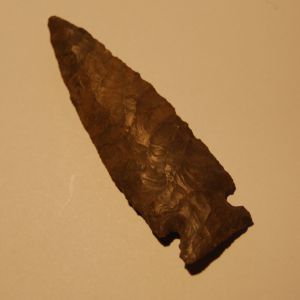
Championship in which Dutch flint carvers show how a craft that has been lost for more than 40,000 years comes back to life. Flint is harder than steel. Participants have to carve a hand axe out of flint within two hours. They do this by using tools similar to those used by our ancestors, the Neanderthals. The hunter-gatherers probably used the hand axes for slaughtering and skinning animals and cutting down small trees and branches.